
In today’s competitive job market, students and fresh graduates are constantly looking for career paths that offer strong growth, high salaries, and long-term stability. One of the most promising options is building a career in SAP (Systems, Applications, and Products in Data Processing).
SAP is one of the most widely used enterprise resource planning (ERP) systems in the world. Thousands of companies rely on SAP software to manage their business operations, creating a huge demand for trained SAP professionals.
If you are a fresher wondering how to start your journey in SAP, this guide will help you understand the right steps.
Understand What SAP Is
Before starting a career in SAP, it is important to understand what SAP actually does.
SAP is an ERP system that integrates different departments of a company into a single platform. It helps organizations manage operations such as:
- Finance and accounting
- Sales and distribution
- Supply chain management
- Human resources
- Procurement and inventory
Because SAP connects all business processes in one system, companies need skilled professionals who can manage, configure, and support these systems.
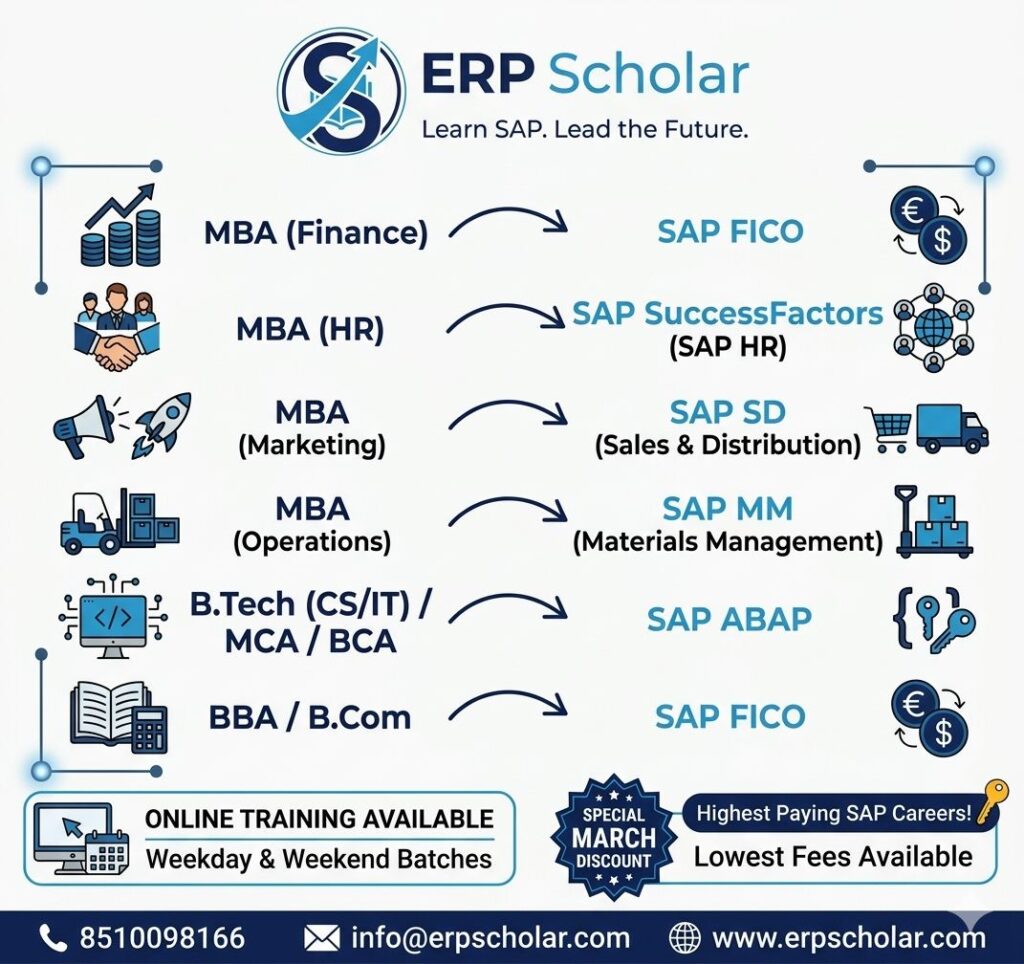 Choose the Right SAP Module
One of the most important steps for freshers is selecting the right SAP module according to their educational background.
Some common SAP modules include:
For Commerce / MBA Finance students
- SAP FICO (Finance and Controlling)
For Engineering or Technical students
- SAP ABAP (Technical Development)
- SAP BASIS
For Management or Operations students
- SAP MM (Materials Management)
- SAP SD (Sales and Distribution)
- SAP HCM (Human Capital Management)
Choosing a module aligned with your academic background makes learning easier and improves job opportunities.
Get Professional SAP Training
SAP is not just theoretical knowledge — it requires practical system experience. That’s why professional training is very important.
A good SAP training program should include:
- Real-time system access
- Practical assignments
- Business process understanding
- Implementation case studies
- Interview preparation
Professional training helps freshers understand how SAP works in real companies.
Work on Practical Projects
Practical exposure plays a major role in building SAP expertise. During training, students should focus on:
- Configuration exercises
- Business process scenarios
- Case studies
- Real-time project simulations
Hands-on experience improves confidence and makes candidates job-ready.
Prepare for SAP Job Roles
Freshers typically start their SAP careers in roles such as:
- SAP Support Consultant
- SAP Junior Consultant
- SAP Analyst
- SAP Implementation Trainee
These roles allow beginners to gain real project experience and gradually move toward advanced consulting positions.
Build a Strong Resume and LinkedIn Profile
To enter the SAP job market, freshers should create a professional resume highlighting:
- SAP module training
- Practical projects
- Business process knowledge
- Certifications and skills
Maintaining an active LinkedIn profile also helps connect with recruiters and SAP professionals.
Continue Learning and Upskilling
SAP is constantly evolving with new technologies such as:
- SAP S/4HANA
- SAP Cloud Solutions
- SAP Analytics and Data Intelligence
Professionals who continuously upgrade their skills can grow faster and move into senior consulting roles.
Career Growth in SAP
A typical SAP career path looks like this:
SAP Trainee → SAP Consultant → Senior Consultant → SAP Solution Architect → SAP Project Manager
With experience and expertise, SAP professionals can work on global projects and earn highly competitive salaries.
Conclusion
Starting a career in SAP as a fresher can be one of the smartest decisions for students who want to combine technology, business processes, and consulting skills.
With the right training, practical experience, and continuous learning, SAP professionals can build successful careers in leading organizations across the world.
At ERP Scholar, we help students and professionals start their SAP careers through practical training, expert guidance, and industry-oriented learning programs designed to make candidates job-ready.